Everyday Reminders

Keep one useful thought close.

Eleven stand-alone posters for the moments when it helps to pause, notice and come back to the child.

← Back to printable collections

Eleven-poster collection

Choose the reminder that fits today.

There is no order to complete and nothing to prove. Open the one that feels useful and leave the rest for another time.

Preview of the What does my child need from me right now? poster

A4 printable · PNG included

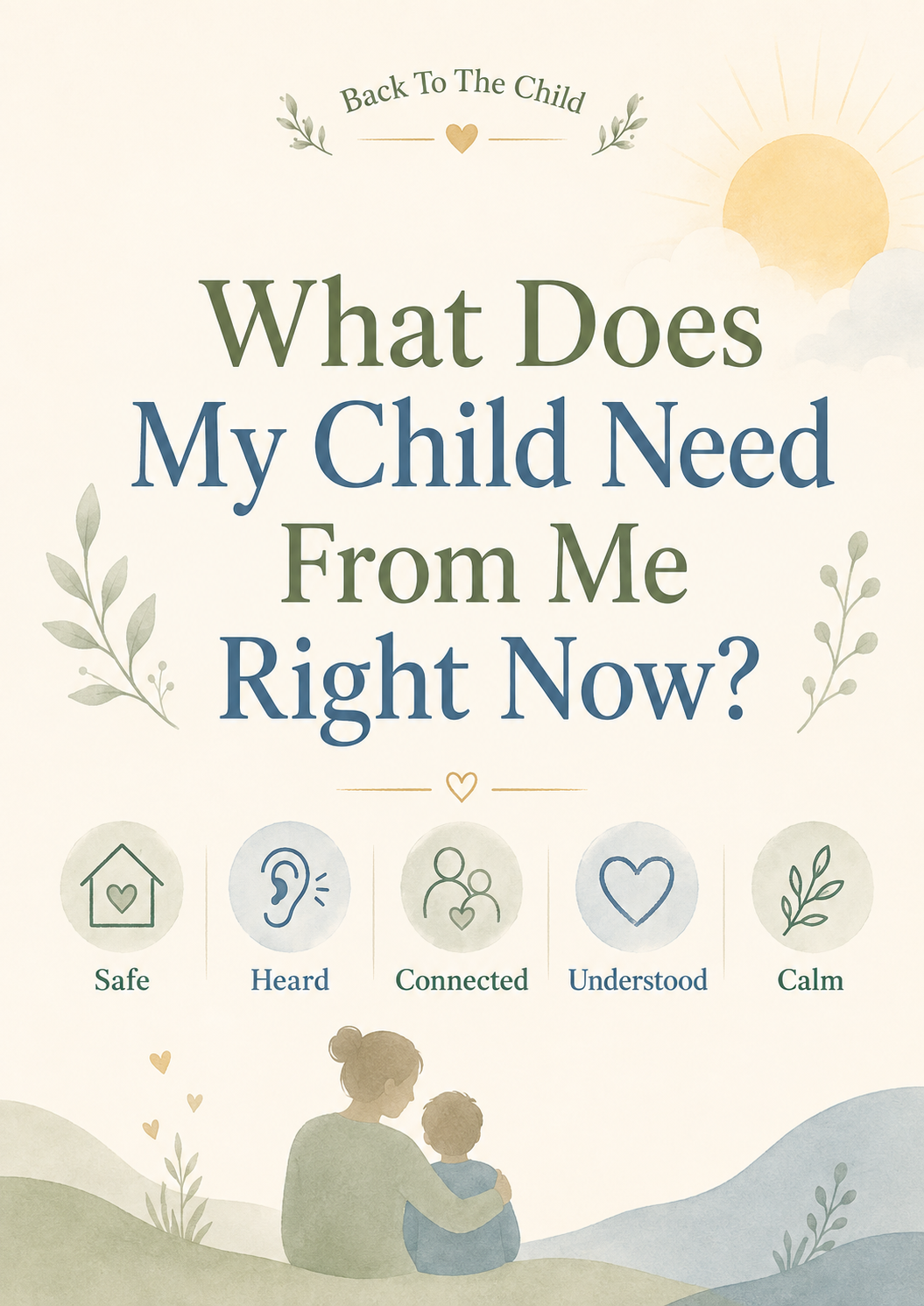
What does my child need from me right now?

A simple visual reminder to return attention to safety, being heard, connection, understanding and calm.

A4 PDF · 2.8 MB
Original PNG · 1055 × 1491 px · 1.9 MB

Read the poster text

What does my child need from me right now?

  • Safe
  • Heard
  • Connected
  • Understood
  • Calm
Preview of the Know Their World poster

A4 printable · PNG included

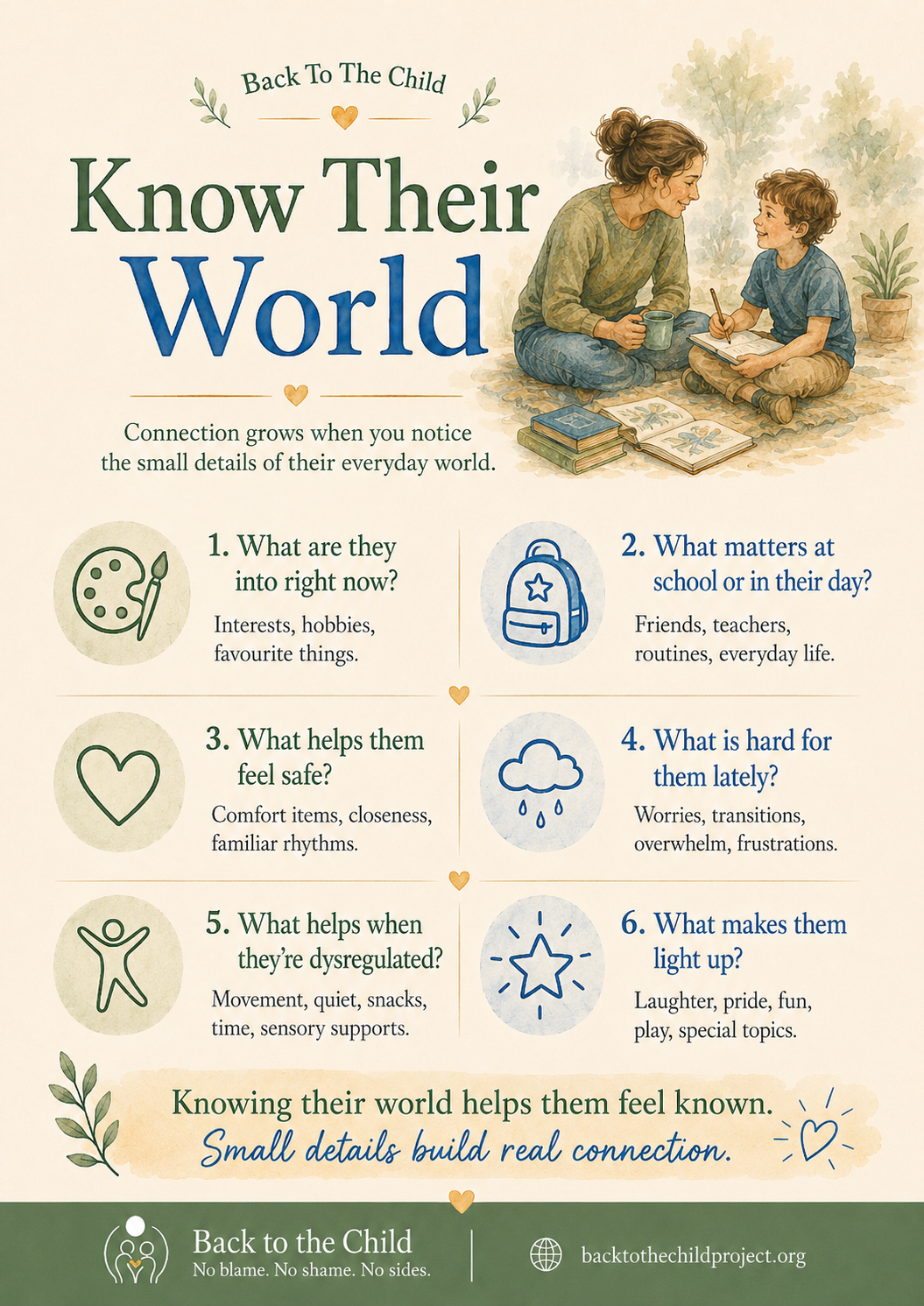
Know Their World

Six gentle questions for noticing the interests, routines, comforts and challenges that help a child feel truly known.

A4 PDF · 3.3 MB
Original PNG · 1055 × 1491 px · 2.2 MB

Read the poster text

Connection grows when you notice the small details of their everyday world.

  1. What are they into right now? Interests, hobbies, favourite things.
  2. What matters at school or in their day? Friends, teachers, routines, everyday life.
  3. What helps them feel safe? Comfort items, closeness, familiar rhythms.
  4. What is hard for them lately? Worries, transitions, overwhelm, frustrations.
  5. What helps when they're dysregulated? Movement, quiet, snacks, time, sensory supports.
  6. What makes them light up? Laughter, pride, fun, play, special topics.

Knowing their world helps them feel known. Small details build real connection.

Preview of the Pause before you react poster

A4 printable · PNG included

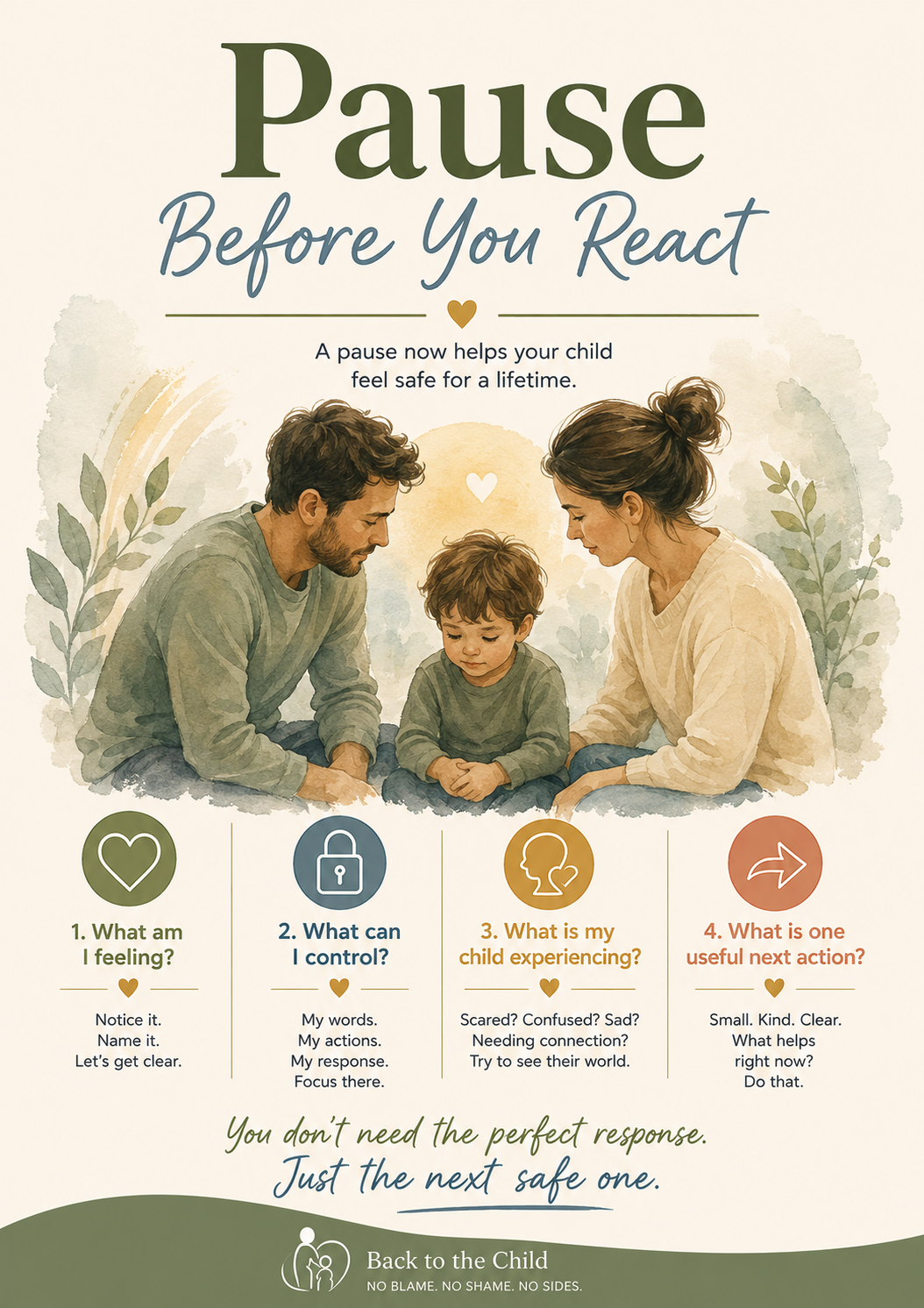
Pause before you react

Four questions to slow the moment down and choose the next safe, useful response.

A4 PDF · 3.0 MB
Original PNG · 1055 × 1491 px · 2.0 MB

Read the poster text

A pause now helps your child feel safe for a lifetime.

  1. What am I feeling? Notice it. Name it.
  2. What can I control? My words, tone and response.
  3. What is my child experiencing? See their world before reacting.
  4. What is one useful next action? Keep it small, kind and clear.

You don't need the perfect response. Just the next safe one.

Preview of the Look inward before looking outward poster

A4 printable · PNG included

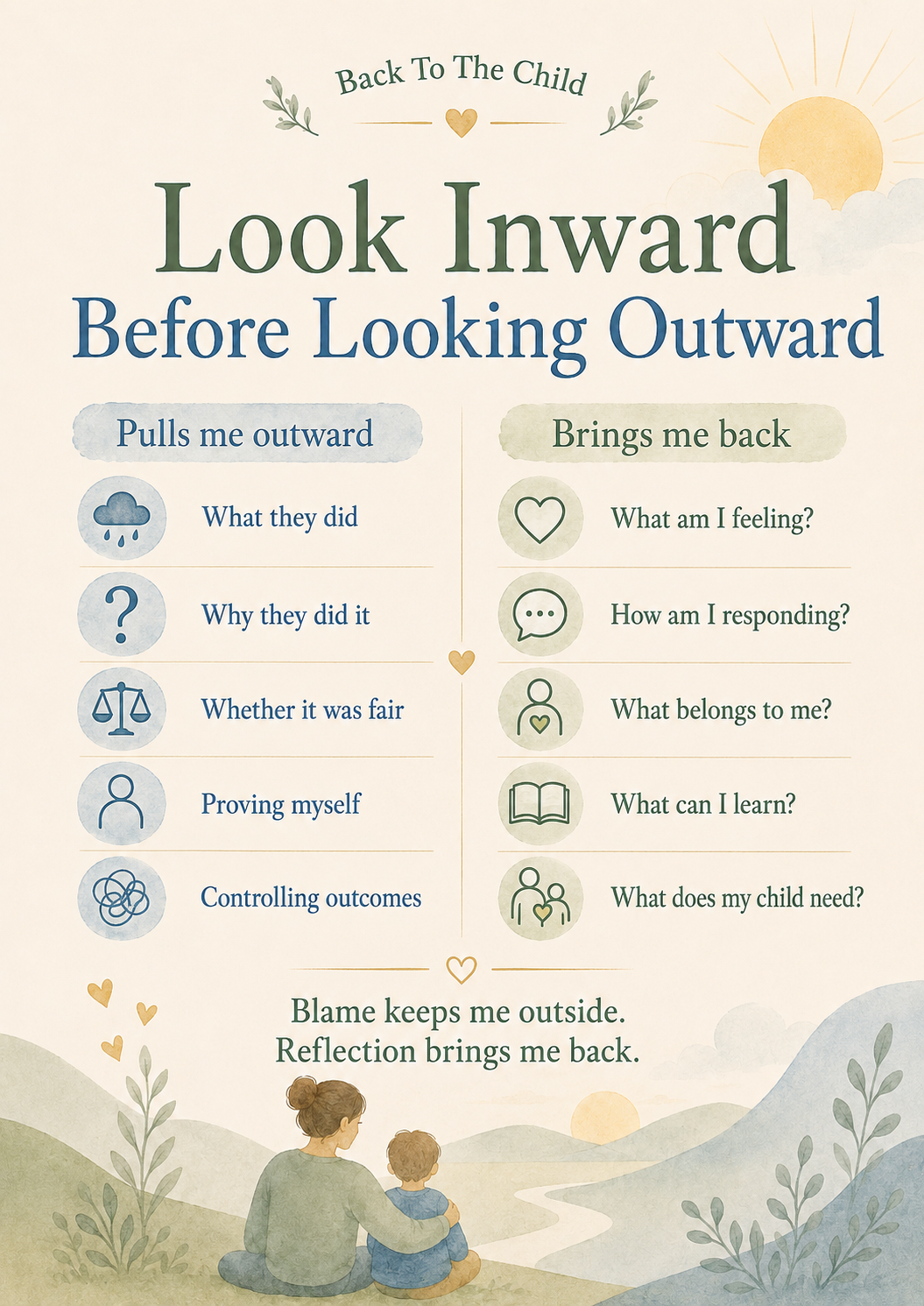
Look inward before looking outward

A reflection prompt for noticing what pulls attention outward and what can bring it back to the child.

A4 PDF · 2.9 MB
Original PNG · 1055 × 1491 px · 2.0 MB

Read the poster text

Pulls me outward

  • What they did
  • Why they did it
  • Whether it was fair
  • Proving myself
  • Controlling outcomes

Brings me back

  • What am I feeling?
  • How am I responding?
  • What belongs to me?
  • What can I learn?
  • What does my child need?

Blame keeps me outside. Reflection brings me back.

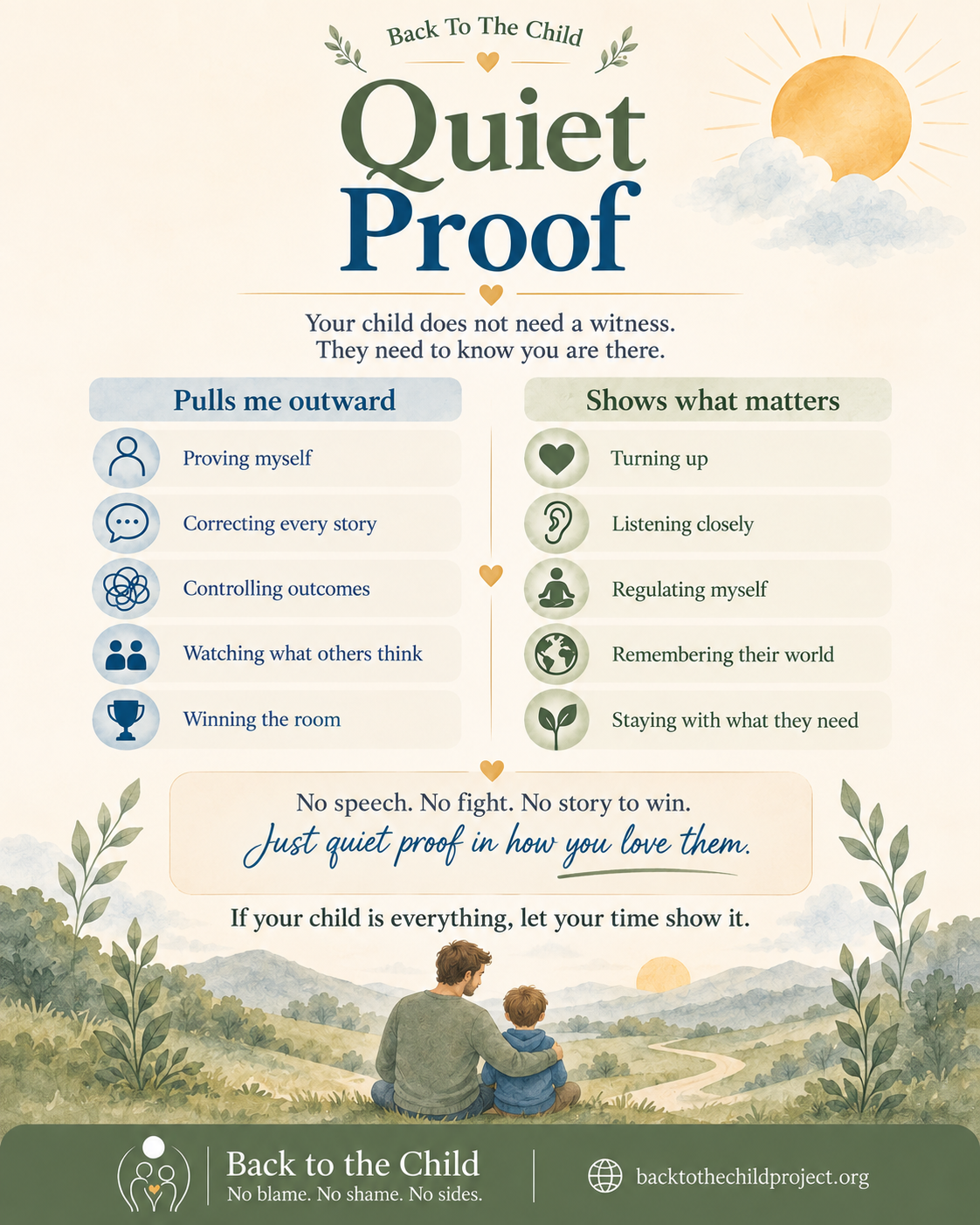
Preview of the Quiet Proof poster

A4 printable · PNG included

Quiet Proof

A reminder to move attention away from proving, correcting and winning—and toward the steady care a child can experience.

A4 PDF · 2.7 MB
Original PNG · 1122 × 1402 px · 1.9 MB

Read the poster text

Your child does not need a witness. They need to know you are there.

Pulls me outward

  • Proving myself
  • Correcting every story
  • Controlling outcomes
  • Watching what others think
  • Winning the room

Shows what matters

  • Turning up
  • Listening closely
  • Regulating myself
  • Remembering their world
  • Staying with what they need

No speech. No fight. No story to win.

Just quiet proof in how you love them.

If your child is everything, let your time show it.

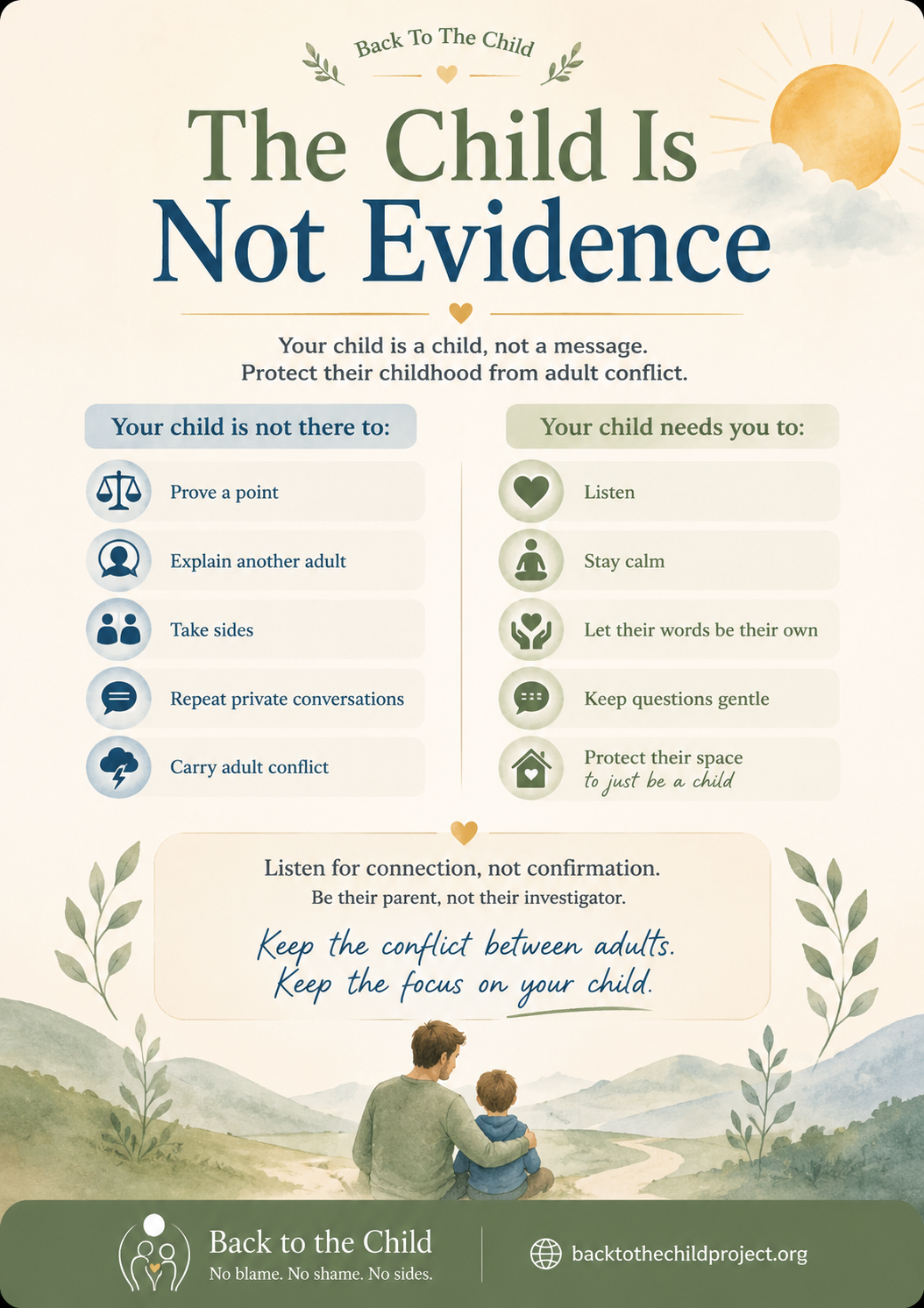
Preview of the The Child Is Not Evidence poster

A4 printable · PNG included

The Child Is Not Evidence

A clear reminder to protect the child from adult proof, sides and investigation—and to listen for connection rather than confirmation.

A4 PDF · 2.6 MB
Original PNG · 1054 × 1492 px · 1.7 MB

Read the poster text

Your child is a child, not a message. Protect their childhood from adult conflict.

Your child is not there to:

  • Prove a point
  • Explain another adult
  • Take sides
  • Repeat private conversations
  • Carry adult conflict

Your child needs you to:

  • Listen
  • Stay calm
  • Let their words be their own
  • Keep questions gentle
  • Protect their space to just be a child

Listen for connection, not confirmation. Be their parent, not their investigator.

Keep the conflict between adults. Keep the focus on your child.

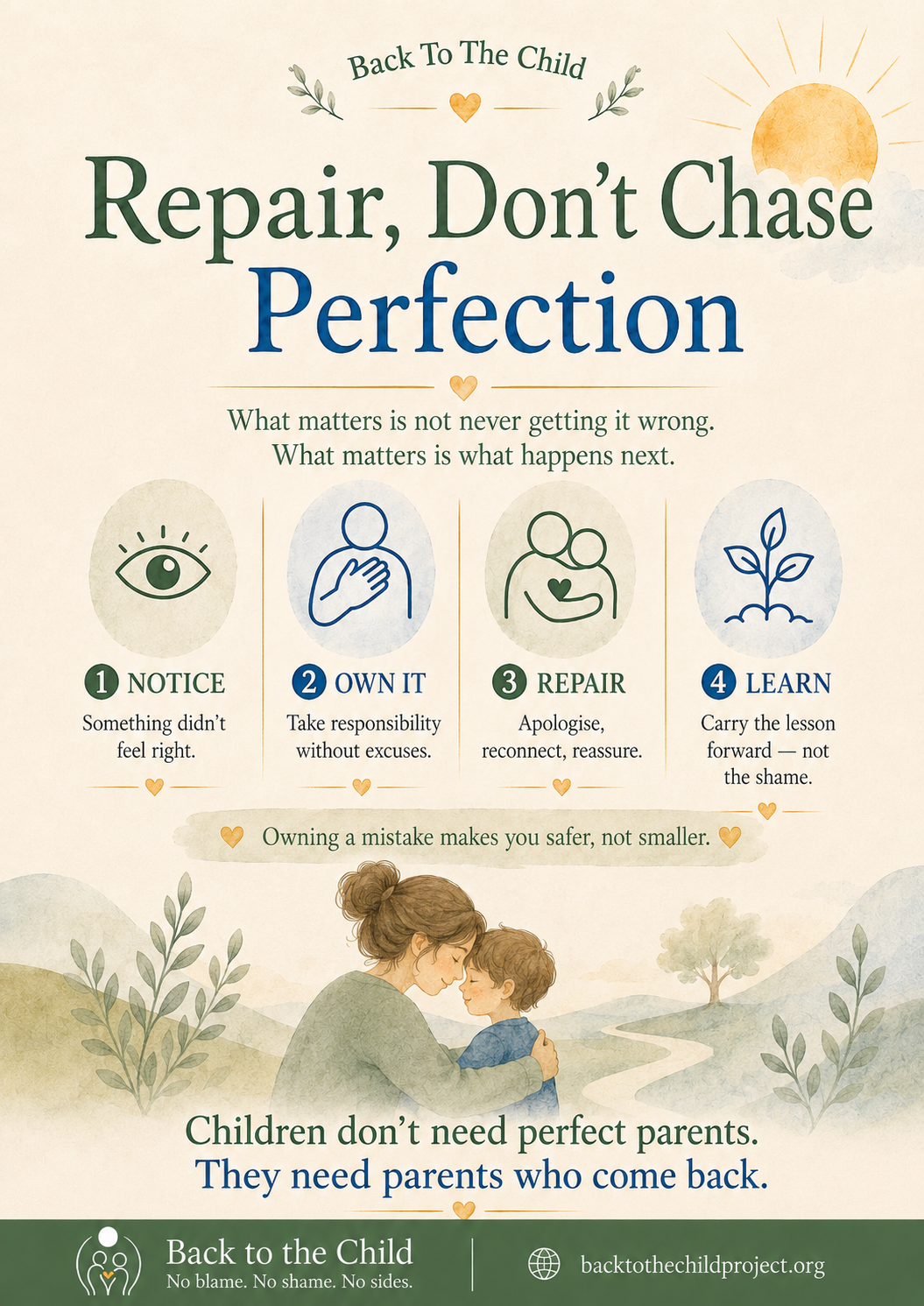
Preview of the Repair, Don’t Chase Perfection poster

A4 printable · PNG included

Repair, Don’t Chase Perfection

Four calm steps for what comes after a mistake: notice it, own it, repair the connection and carry the lesson forward.

A4 PDF · 3.3 MB
Original PNG · 1055 × 1491 px · 2.2 MB

Read the poster text

What matters is not never getting it wrong. What matters is what happens next.

  1. Notice: Something didn't feel right.
  2. Own it: Take responsibility without excuses.
  3. Repair: Apologise, reconnect, reassure.
  4. Learn: Carry the lesson forward—not the shame.

Owning a mistake makes you safer, not smaller.

Children don't need perfect parents. They need parents who come back.

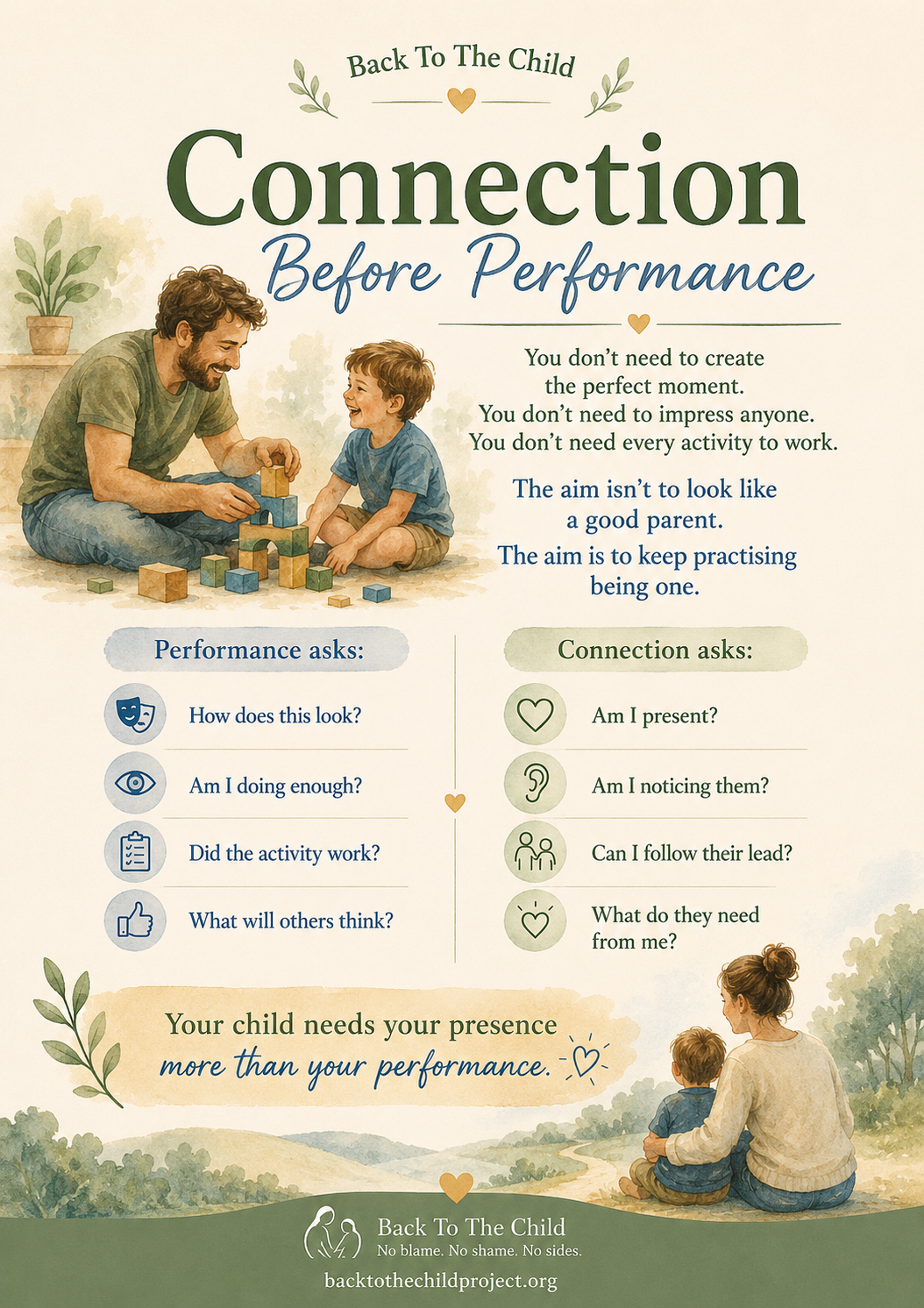
Preview of the Connection Before Performance poster

A4 printable · PNG included

Connection Before Performance

A reminder that children need an adult’s presence, attention and willingness to follow their lead more than a perfect-looking activity.

A4 PDF · 3.5 MB
Original PNG · 1054 × 1492 px · 2.3 MB

Read the poster text

You don't need to create the perfect moment. You don't need to impress anyone. You don't need every activity to work.

The aim isn't to look like a good parent. The aim is to keep practising being one.

Performance asks:

  • How does this look?
  • Am I doing enough?
  • Did the activity work?
  • What will others think?

Connection asks:

  • Am I present?
  • Am I noticing them?
  • Can I follow their lead?
  • What do they need from me?

Your child needs your presence more than your performance.

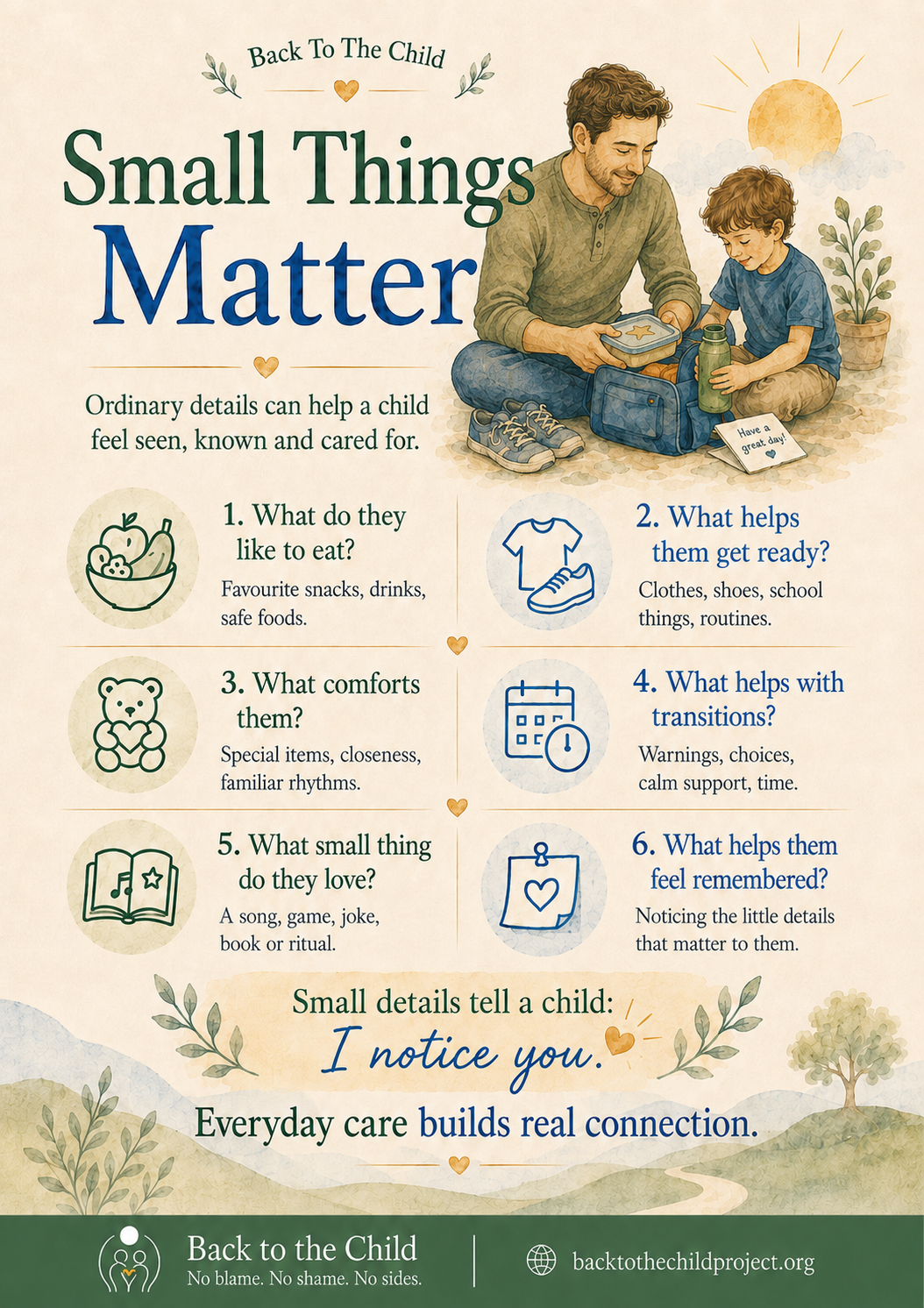
Preview of the Small Things Matter poster

A4 printable · PNG included

Small Things Matter

An everyday-care prompt for noticing the foods, routines, comforts and small favourites that help a child feel remembered.

A4 PDF · 3.7 MB
Original PNG · 1054 × 1492 px · 2.4 MB

Read the poster text

Ordinary details can help a child feel seen, known and cared for.

  1. What do they like to eat? Favourite snacks, drinks, safe foods.
  2. What helps them get ready? Clothes, shoes, school things, routines.
  3. What comforts them? Special items, closeness, familiar rhythms.
  4. What helps with transitions? Warnings, choices, calm support, time.
  5. What small thing do they love? A song, game, joke, book or ritual.
  6. What helps them feel remembered? Noticing the little details that matter to them.

Small details tell a child: I notice you.

Everyday care builds real connection.

Preview of the Before the screen, give them ten poster

A4 printable · PNG included

Before the screen, give them ten

A reminder to offer ten minutes of real connection after time apart, in whatever form helps the child settle and reconnect.

A4 PDF · 3.3 MB
Original PNG · 1055 × 1491 px · 2.1 MB

Read the poster text

They've been away from you all day. Before the screen, give them ten minutes of real connection.

Connection looks different for every child

  • Move: wrestle, play, run
  • Connect: cuddle, sit close, be present
  • Reset: snack, drink, quiet time
  • Talk: listen, ask, let them share

The goal isn't to keep them entertained. It's to help them come home.

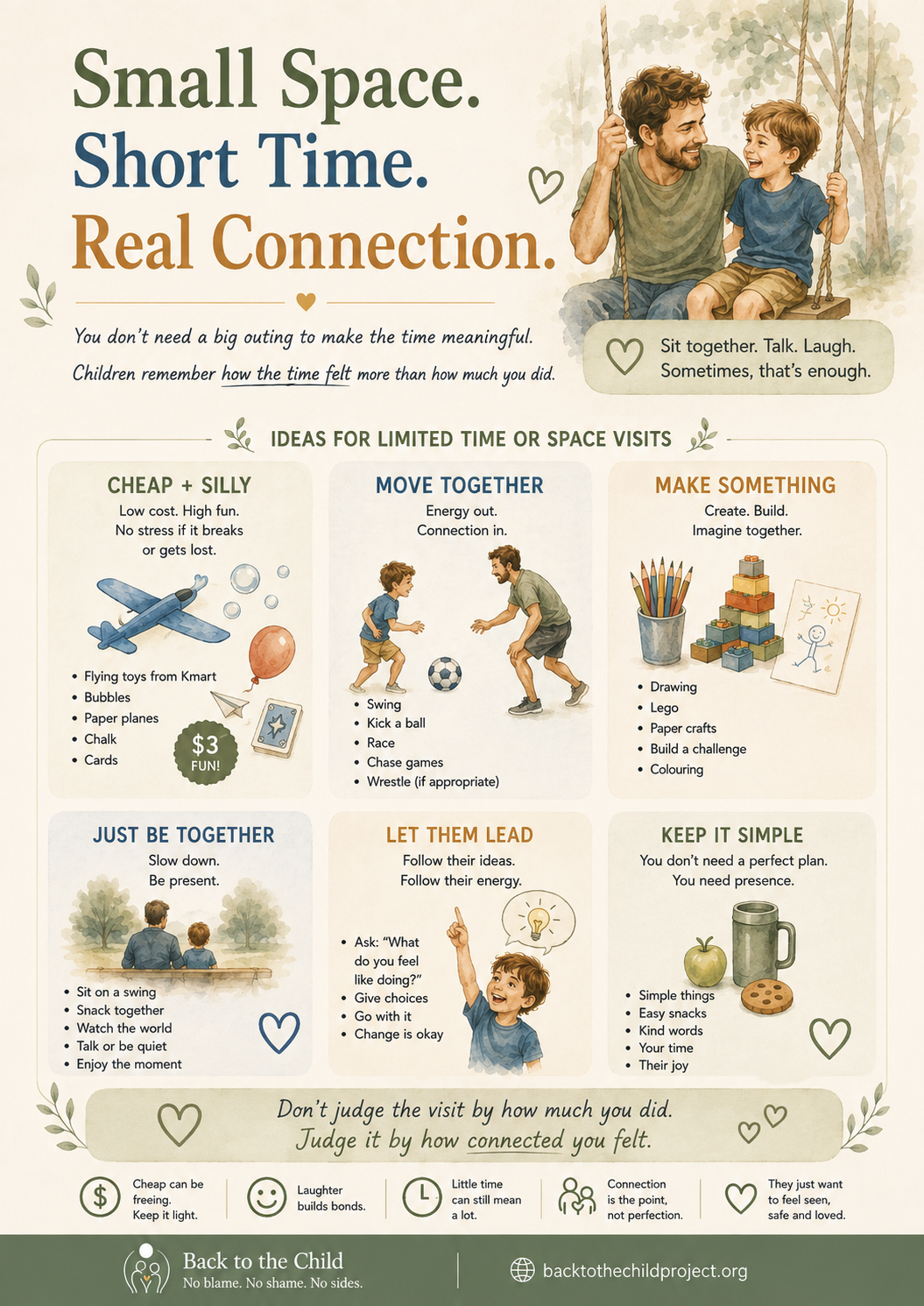
Preview of the Small space. Short time. Real connection. poster

A4 printable · PNG included

Small space. Short time. Real connection.

Simple, low-pressure ideas for making limited time or space feel meaningful through presence, play and following the child’s lead.

A4 PDF · 3.2 MB
Original PNG · 1055 × 1491 px · 2.2 MB

Read the poster text

You don't need a big outing to make the time meaningful. Children remember how the time felt more than how much you did.

Sit together. Talk. Laugh. Sometimes, that's enough.

Ideas for limited time or space visits

  • Cheap + silly: flying toys from Kmart, bubbles, paper planes, chalk or cards. Low cost. High fun. No stress if it breaks or gets lost.
  • Move together: swing, kick a ball, race, chase games or wrestle if appropriate. Energy out. Connection in.
  • Make something: drawing, Lego, paper crafts, build a challenge or colouring. Create. Build. Imagine together.
  • Just be together: sit on a swing, snack together, watch the world, talk or be quiet, or enjoy the moment. Slow down. Be present.
  • Let them lead: ask, “What do you feel like doing?”, give choices, go with it and remember that change is okay. Follow their ideas. Follow their energy.
  • Keep it simple: simple things, easy snacks, kind words, your time and their joy. You don't need a perfect plan. You need presence.

Don't judge the visit by how much you did. Judge it by how connected you felt.

Cheap can be freeing. Keep it light. Laughter builds bonds. Little time can still mean a lot. Connection is the point, not perfection. They just want to feel seen, safe and loved.